
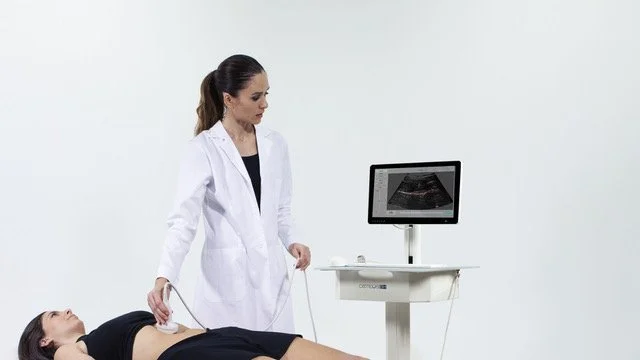
Echolight Rems Bone Scan
An FDA-Approved, radiation-free diagnostic solution to assess bone density and fragility using REMS (Radiofrequency Echographic Multi-Spectrometry) technology.
Unlike traditional imaging methods that rely on radiation and fixed equipment, REMS uses advanced ultrasound-based analysis to evaluate bone density, bone quality, and fracture risk.
REMS Evaluates Two Key Metrics:
Bone Mineral Density (BMD) –including standard T/Z scores
Bone Quality- Microarchitecture of the inner trabecular (“spongy”) bone
What’s included in a REMS Scan?
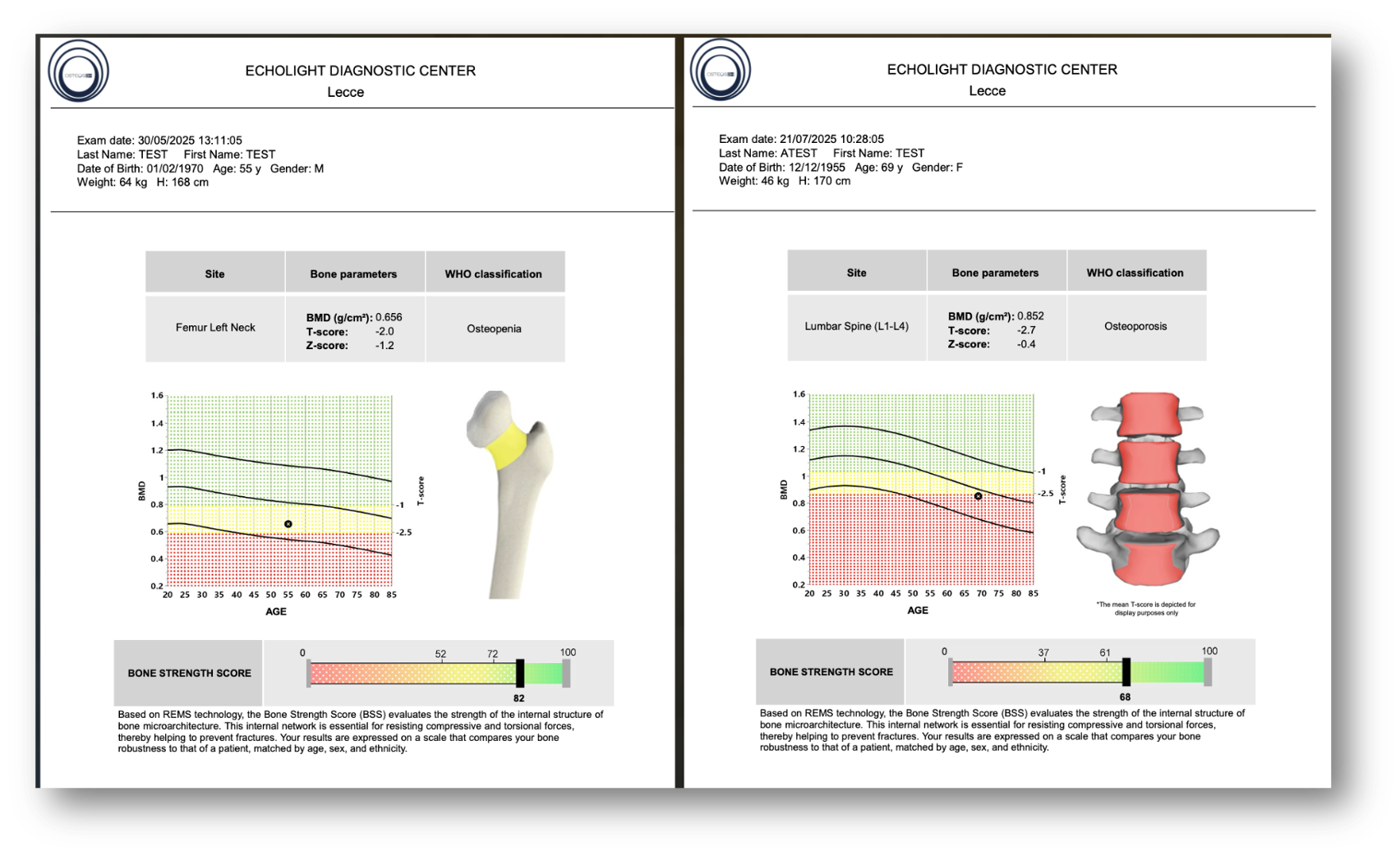
A diagnostic scan of your hip and your spine which includes:
Bone Mineral Density (BMD) with T Score & Z Score
REMS Bone Strength Score (the bone quality)
An optional body composition scan that provides data on your personal total body fat, muscle, metabolic functioning, and more.
Frequently Asked Questions
-
A baseline bone health check can provide valuable insights into your bone strength, helping you make proactive decisions about your health and lifestyle.
Other Potential Risk Factors:
Women in midlife, especially between ages 45 and 55 (perimenopausal), or those who experienced early menopause before age 45
Men with low testosterone, who may be at increased risk for reduced bone density
Anyone who has had a fracture after age 50 or has a family history of osteoporosis or hip fractures
People who smoke, drink heavily, or take certain medications, including: steroids, proton pump inhibitors, GLP-1 agonists (semaglutides) for weight loss
Individuals with chronic health conditions such as: rheumatoid arthritis, thyroid disorders, chronic liver or kidney disease, diabetes, gut health concerns such as Crohn’s disease, ulcerative colitis, or celiac disease, or a history of cancer treatments with chemotherapy or radiation.
If you have any questions, your healthcare team is the best resource for personalized guidance.
-
You can schedule your scan online here.
-
Our scans include a scan of one hip and your L1-L4 vertebra.
Osteostrong Member: $200 | Non- Member: $250
Second Hip: $50 | Body Composition Scan: $25
-
No, you do not.
-
We suggest you get a scan every 6-12 months.
-
You will get your results the day of the scan via email, and the technician will go over those results with you.
-
Currently, REMS scans are not processed through insurance, full payment is required at the time of booking.
However, Echolight offers a reimbursement guide to help you submit a cliam to your insurance provider. We recommend you contact your insurance company directly, using CBT Code 0815T, and this guide to explore potential reimbursement options.
-
The scans are located at Osteostrong Belle Meade at 6000 Hwy 100, Suite 128, Nashville, TN 37205
We recommend fasting for 4 hours prior to your scan (small sips of water are okay). Digestion can produce intestinal gas, which may interfere with imaging of the lumbar spine.
Please arrive 10 minutes before your scheduled appointment. While we do our best to accommodate late arrivals, your scan may need to be rescheduled if we’re fully booked.
There are no restrictions on medications or calcium supplements. You may take them as usual before your appointment.
-
Wear loose, comfortable clothing such as leggings, sweatpants, or loose shorts, etc.
For lumbar spine scans you’ll lift your shirt to just below your bra line
For hip scans you’ll lower your pants or shorts to mid-thigh (underwear stays on)
During the scan, you’ll lie face-up on an exam table with a drape over you for privacy and warmed gel for your comfort.
-
Your REMS evaluation takes approximately 30-45 minutes, which includes time to gather basic health information (e.g., date of birth, height, weight, etc.). and a short consultation about the scan results.
About REMS
-
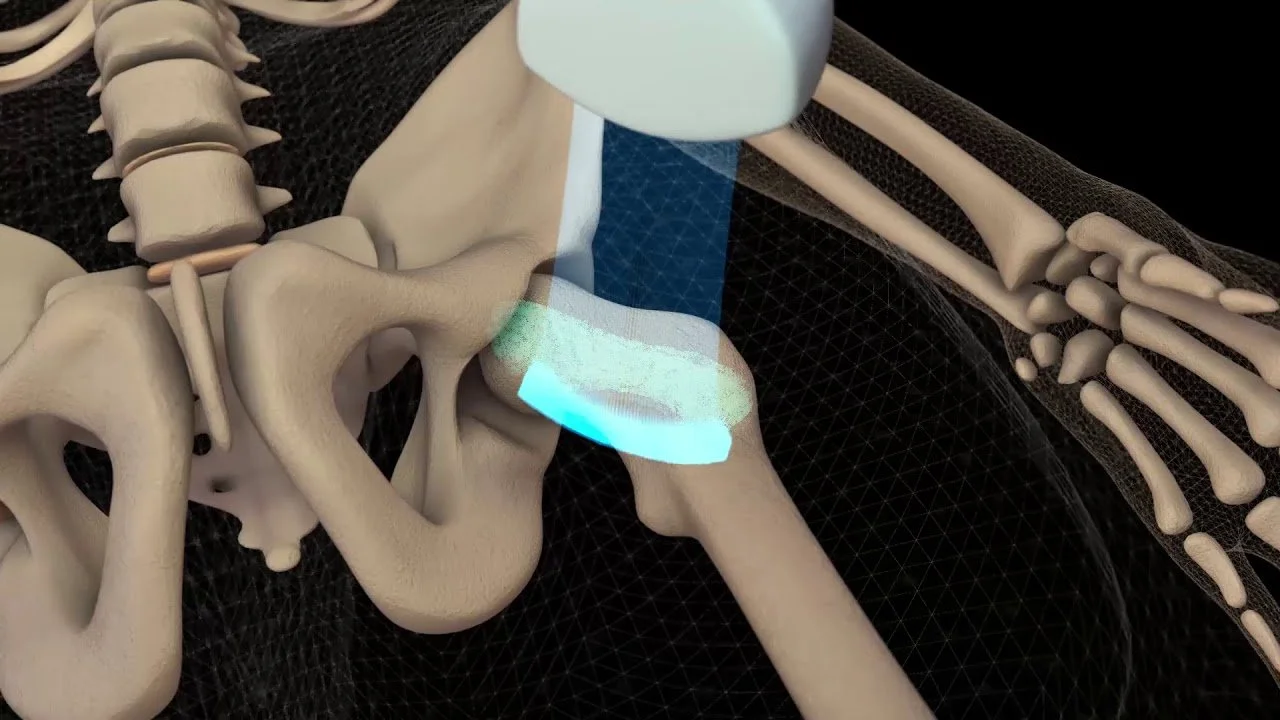
Echolight® REMS (Radiofrequency Echographic Multi Spectrometry) is an innovative, radiation-free technologythat combines ultrasound and radiofrequency analysis to assessbone density and quality.
REMS works by sending sound waves through the bone. As the waves reflect off various internal structures, differentiating bone from organs, and other tissues, the device captures and analyzes the signals using advanced algorithms. This allows REMS to deliver a detailed, multi-dimensional evaluation of bone health—measuring both Bone Mineral Density (BMD) and Bone Quality using a Strength Score that reflects bone strength.
For more technical details, please visit Echolight’s official website.
-
1. Radiation-Free and Highly Sensitive
Up to 5x more sensitive than standard DEXA scans in detecting changes in Bone Mineral Density (BMD)
Radiation-free, enabling safe and frequent monitoring—as often as every 6 months
Ideal for proactive bone health management and early treatment adjustments
2. Greater Accuracy
REMS provides more accurate results than DEXA for individuals with:
Scoliosis
Osteoarthritis or other spinal conditions
Bone spurs or history of vertebroplasty
Orthopedic implants or hardware (e.g., screws, plates)
Positioning difficulties or other technical limitations
3. Advanced Fracture Risk Assessment
REMS proprietary Bone Strength Score analyzes bone strength and quality
4. Real-Time Data and Fast Results
Comprehensive diagnostic report is generated within 5 minutes
Clients receive an email with the full report to share with their healthcare team
-
Both DEXA and REMS are valuable tools for assessing bone health, but they differ significantly in how they measure bone quality.
REMS evaluates two key metrics:
Bone Mineral Density (BMD)
Bone Quality (strength), measures the microarchitecture of the trabecular bone in both the lumbar spine and femoral neck (hip)
In contrast, DEXA (Dual-Energy X-ray Absorptiometry) primarily measures BMD only. While DEXA can estimate bone qualityusing Trabecular Bone Score (TBS) software, this add-on is:
Not routinely available in clinical settings
Limited to the lumbar spine only
For long term bone health monitoring, we recommend comparing DEXA to DEXA and REMS to REMS
-
REMS (Radiofrequency Echographic Multi Spectrometry) may be new to some areas, but it is a proven, globally established technology with over a decade of clinical use.
A Global Standard in Bone Health
Developed by Echolight in Lecce, Italy
Used clinically for more than 13 years across Europe (Italy, France, Belgium, Spain, UK, Poland) and around the world, including Australia, Japan, India, Brazil, Canada, and beyond
FDA Approval in the United States in 2018
Named Italy’s “gold standard” for bone densitometry in 2020
Trusted by NASA
In December 2024, NASA adopted REMS to monitor astronauts’ bone health during spaceflight simulations
Research
Diagnostics, 2024: The Advantages of Radiofrequency Echographic MultiSpectrometry in the Evaluation of Bone Mineral Density in a Population with Osteoarthritis at the Lumbar Spine
Aging Clinical and Experimental Research, 2024: Bone health status evaluation in men by means of REMS technology
La radiologia medica, 2024: DXA beyond bone mineral density and the REMS technique: new insights for current radiologists practice
Aging Clinical and Experimental Research, 2024: Radiofrequency echographic multi spectrometry (REMS) in the diagnosis and management of osteoporosis: state of the art
Calcified Tissue International, 2023: Fragility Score: a REMS-based indicator for the prediction of incident fragility fractures at 5 years
Diagnostics, 2023: Radiofrequency Echographic Multi Spectrometry (R.E.M.S.): New Frontiers for Ultrasound Use in the Assessment of Bone Status—A Current Picture
BMC Musculoskeletal Disorders, 2022: Could radiofrequency echographic multispectrometry (REMS) overcome the overestimation in BMD by dual-energy X-ray absorptiometry (DXA) at the lumbar spine?
